
Article: How to Date Vintage Nike Tags and Labels: 1970s–2000s Guide
How to Date Vintage Nike Tags and Labels: 1970s–2000s Guide
Original Vintage Research & Reference Guide by Vintage Rare USA
This guide was originally published by Vintage Rare USA on August 25, 2023.
It draws on our hands-on experience examining vintage Nike garments, labels, construction details, and manufacturing variations found across our vintage clothing inventory and archive.
Originally published: August 25, 2023
Last reviewed and updated: September 6, 2026
Published by: Vintage Rare USA
Original photography and written material in this guide are © Vintage Rare USA unless otherwise credited. Please cite and link to this guide when referencing our research. Unauthorized reproduction of our original photographs or substantial portions of this guide is prohibited.

How to Date Vintage Nike Tags: Complete Label Guide (1978–2000s)
Trying to determine when a vintage Nike T-shirt, sweatshirt, jacket, or pair of track pants was made?
The garment’s Nike tag is one of the best places to start.
Nike changed its labels repeatedly throughout the 1970s, 1980s, 1990s, and early 2000s. Changes in color, logo design, typography, construction, sizing, and country of manufacture can help narrow down a garment’s production period.
This visual Nike tag guide covers some of the most recognizable labels used from the late 1970s through the 2000s, including the Pinwheel, Orange, Blue, Grey, Black, White, Red-and-Black, and Silver tags.
However, a tag should never be used as the only dating clue. Nike sometimes used multiple labels during the same period, and certain product lines had their own specialized tags. For the most accurate estimate, examine the tag together with the garment’s care label, materials, stitching, construction, country of manufacture, graphics, and overall design.
Nike Tags by Year: Quick Timeline (1978–2000s)
| Nike tag or label | Approximate period | Commonly found on |
|---|---|---|
| Pinwheel label | 1978–1982 | T-shirts and athletic apparel |
| Orange label | 1978–1983 | T-shirts, sweatshirts, jackets and shoes |
| Blue label | 1984–1987 | T-shirts, sweatshirts, jackets and joggers |
| Grey label | 1987–1994 | T-shirts, sweatshirts, jackets and joggers |
| Black label | Around 1994 | T-shirts, sweatshirts and jackets |
| White label | 1994–1999 | T-shirts, sweatshirts, jackets, shorts, pants and caps |
| Red-and-Black label | 1997–1999 | Sweatshirts, jackets and hats |
| Silver label | Early to mid-2000s | T-shirts, sweatshirts, jackets and joggers |
These dates should be treated as practical estimates rather than absolute cutoffs. Label styles frequently overlapped, especially during transitional production years.
Looking for an original piece? Shop vintage Nike T-shirts, sweatshirts and windbreakers. Free US shipping.
Nike Pinwheel Tag / Label (1978–1982)
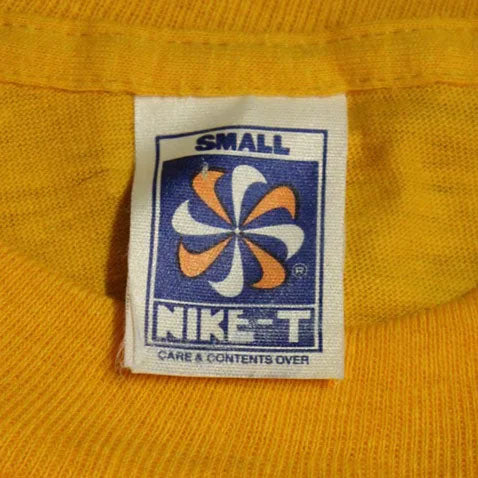
The Nike Pinwheel label is one of the brand’s most distinctive and collectible early apparel tags.
Its design features a circular arrangement of Nike Swooshes that creates a pinwheel effect. The label reflects Nike’s experimental visual identity during the late 1970s and early 1980s.
What to look for
- Circular Pinwheel logo made from multiple Swooshes
- Simple vintage typography
- Frequently associated with early Nike athletic apparel
- Often found on T-shirts
- Commonly paired with lightweight cotton or cotton-blend fabric
Because genuine examples are relatively scarce, the label itself should be inspected carefully. Compare the print quality, font, stitching, fabric, and overall construction with known vintage examples before making an authentication decision.
Nike Orange Tag / Label (1978-1983)
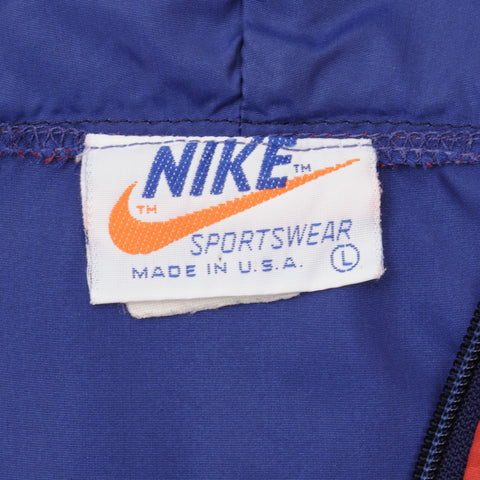
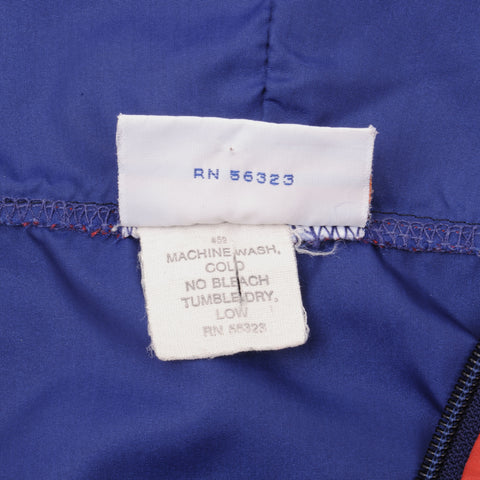
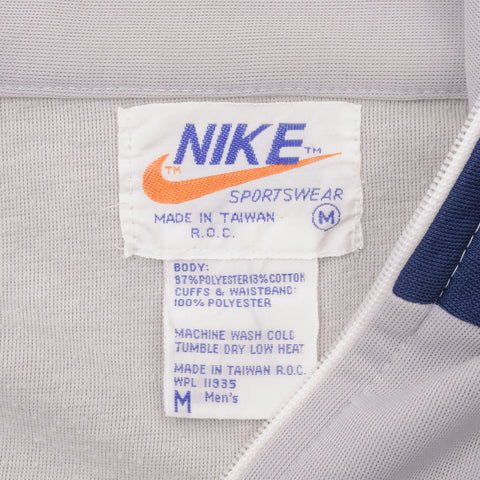
The Nike Orange label is another highly recognizable early Nike tag. It usually features orange branding or an orange Swoosh and is strongly associated with Nike apparel from the late 1970s and early 1980s.
This label can appear on several types of garments, including:
- Vintage Nike T-shirts
- Sweatshirts
- Nylon jackets
- Athletic separates
- Selected footwear
Orange-label garments may differ in tag size, wording, fabrication, and construction. Some were produced in the United States, while others may have different manufacturing origins.
When dating an Orange-label item, also inspect the garment’s fabric, stitching, zipper hardware, print style, and any secondary care label.
Nike Blue Tag / Label (1984-1987)
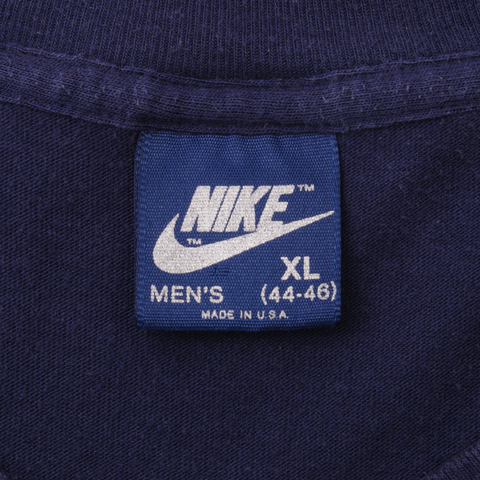
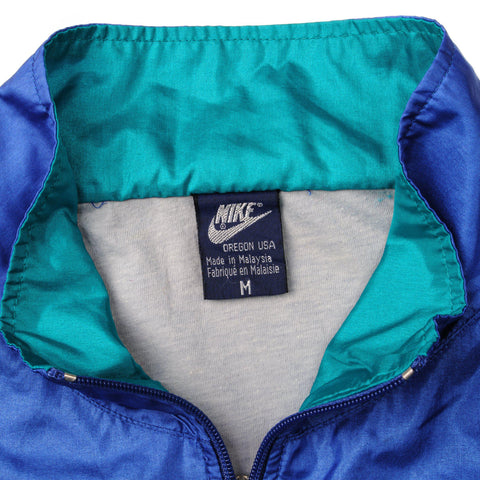
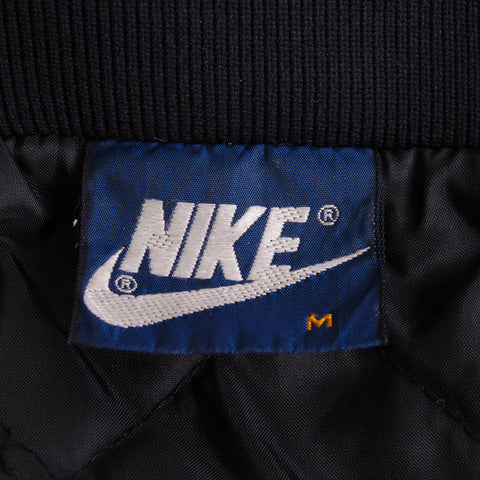
The Nike Blue label is commonly associated with the mid-1980s.
It often displays the Nike name and Swoosh against a blue background or uses blue as the dominant design color. Several variations exist, and the tag’s appearance can differ depending on the garment category.
The Blue label is commonly found on:
- T-shirts
- Sweatshirts
- Track jackets
- Windbreakers
- Joggers
- Athletic apparel
Mid-1980s Nike garments frequently feature bold color blocking, lightweight nylon, contrast panels, embroidered logos, or classic athletic silhouettes.
Those design features can support the approximate date suggested by the tag.
Shop our collection of authentic vintage Nike jackets and windbreakers from the 1980s through the early 2000s.
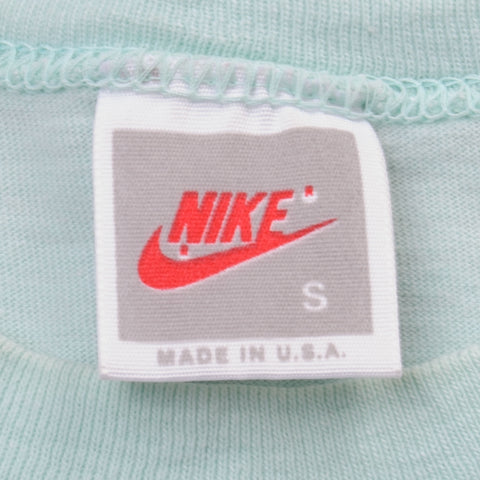
Nike Grey Tag / Label (1989-1994)
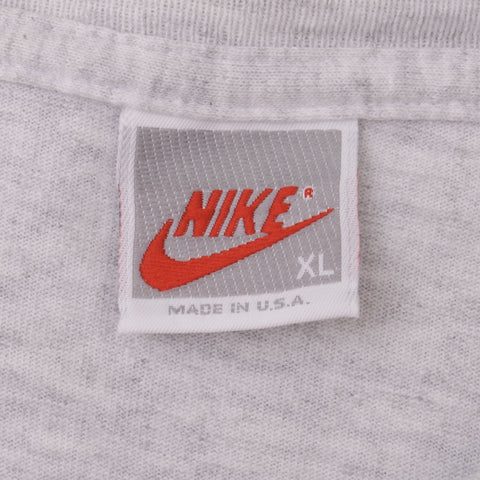
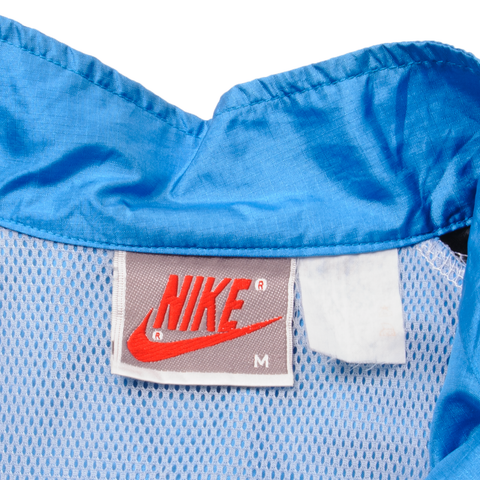
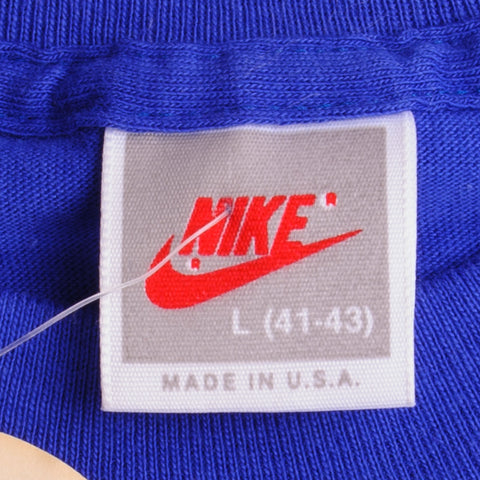
Grey Nike tags appeared in several forms from the late 1980s into the early 1990s.
Because there are multiple Grey-label variations, you should avoid assigning an exact year based on color alone. The font, Swoosh proportions, tag material, size presentation, and garment type may help narrow down the period.
Grey labels are commonly found on:
- Graphic T-shirts
- Logo sweatshirts
- Hoodies
- Track jackets
- Windbreakers
- Joggers
- Training apparel
Many garments from this period have the oversized cuts, bold graphics, color-blocked designs, and relaxed athletic styling associated with late-1980s and early-1990s sportswear.
Important dating note
Some Grey-label styles overlap with later Black and White labels. Transitional tags are normal, so two authentic garments made around the same time may not carry identical labels.
Browse our vintage Nike Grey Label collection.
Nike Black Tag / Label (1994)
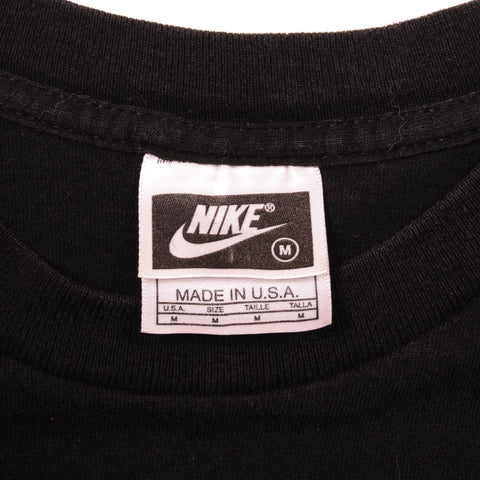
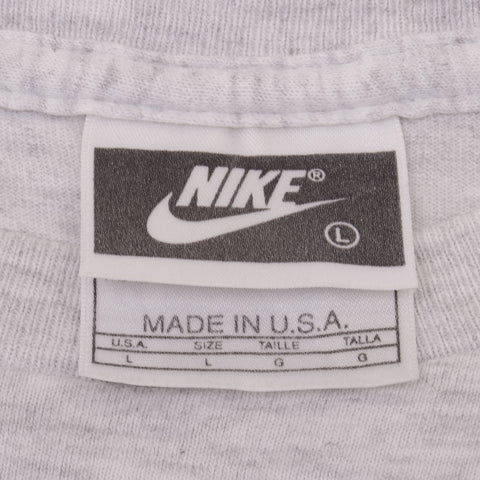
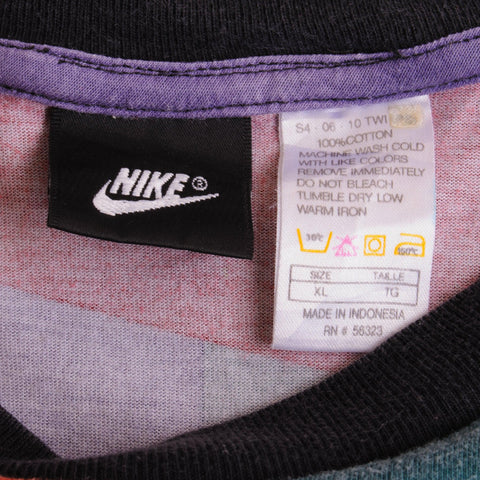
The Nike Black label is generally associated with the early-to-mid-1990s, with many examples dated to around 1994.
It typically uses a dark background with contrasting Nike branding. Compared with earlier Blue and Grey tags, the overall presentation often feels cleaner and more modern.
Black labels may appear on:
- T-shirts
- Sweatshirts
- Jackets
- Athletic separates
Because Nike produced many collections during the 1990s, a Black label does not automatically identify an exact season or product line. Examine any RN numbers, style codes, wash tags, country-of-origin information, and garment-specific details alongside the main brand tag.
Explore the Nike "Black" Label collection on Vintage Rare USA now!
Nike "White" Label (1994-1999)
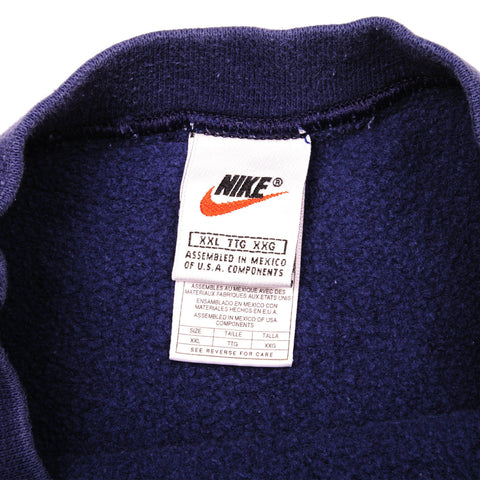

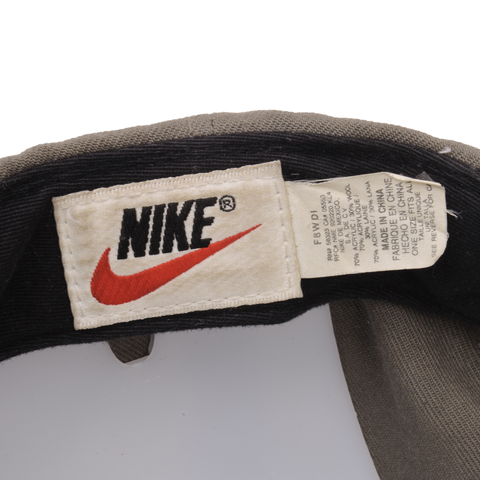
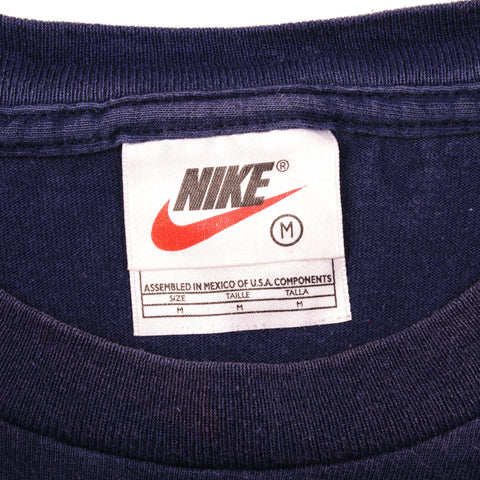
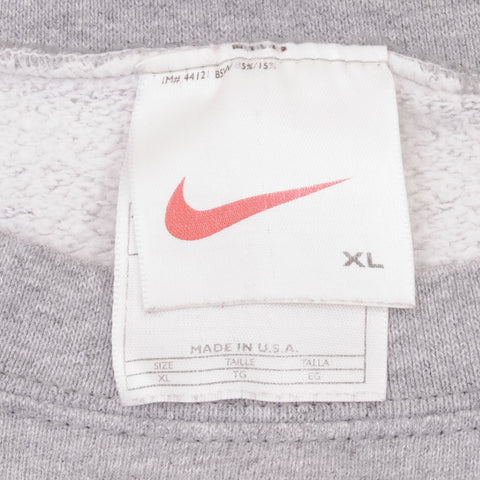
White Nike labels were widely used during the mid-to-late 1990s.
Some versions are printed, while others are woven or embroidered. The design and construction often depend on the garment type.
Printed White labels are frequently seen on:
- T-shirts
- Sweatshirts
- Graphic apparel
Woven or embroidered White labels may appear on:
- Jackets
- Shorts
- Track pants
- Joggers
- Caps
- Performance apparel
A White label is a useful dating clue, but it should be interpreted together with the rest of the garment. Nike’s global manufacturing expanded significantly during this period, so authentic examples may have been made in the United States, Mexico, Canada, or various countries in Asia and elsewhere.
A non-USA country of manufacture does not automatically mean that an item is modern or inauthentic.
. Delve into the Nike "White" Label collection on Vintage Rare USA today!
Nike Red & Black Tag / Label (1997-1999)
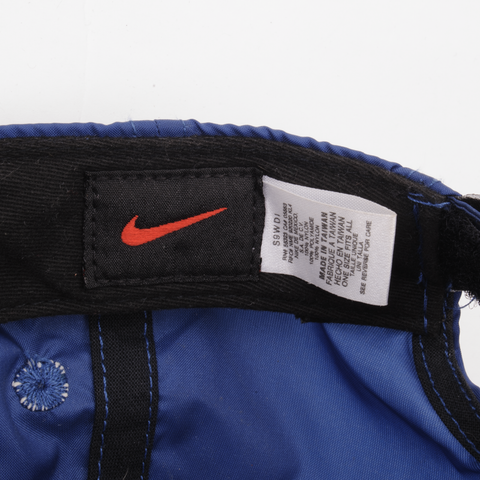
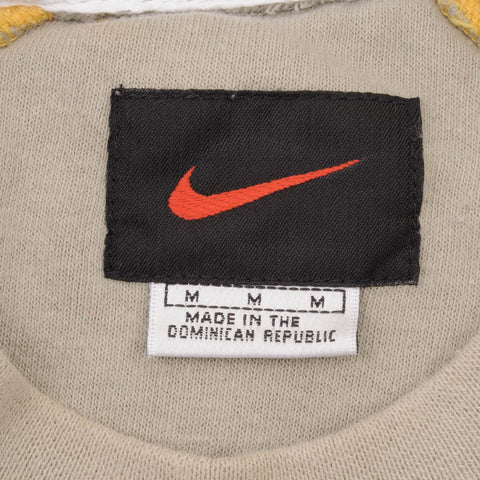
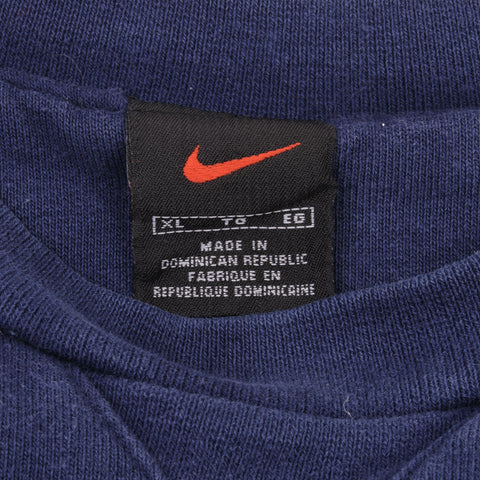
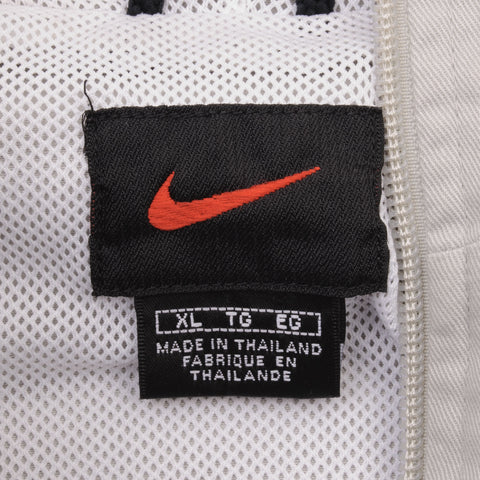
The Nike Red-and-Black label is strongly associated with late-1990s sportswear.
Its high-contrast appearance fits the bold branding used throughout many Nike collections of that period.
This tag is commonly found on:
- Sweatshirts
- Fleece pieces
- Jackets
- Athletic outerwear
- Hats and caps
Some garments carrying this label may have design elements that continued into the early 2000s. When the tag and garment styling appear to suggest different periods, check the smaller care label for additional manufacturing information.
Explore the Nike Red and Black Label range on Vintage Rare USA now!
Nike Silver Tag / Label (Early 2000s)
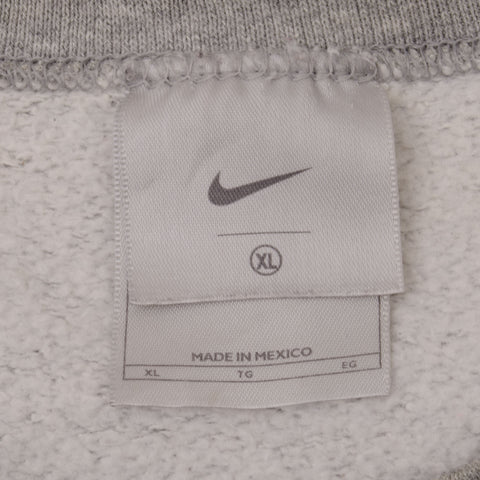
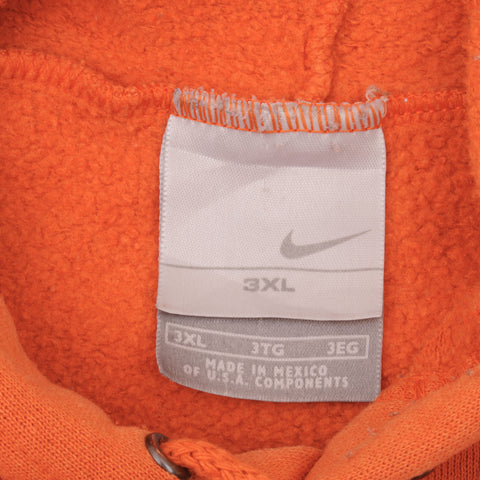
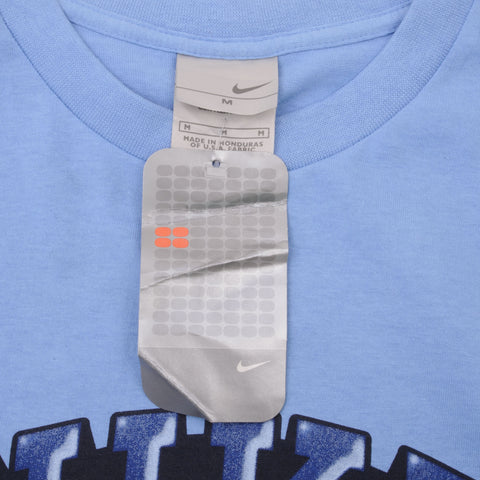
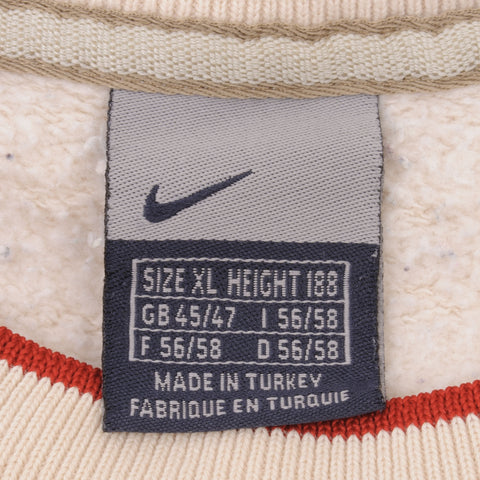
Nike "Silver" Label (Mid 2000s)
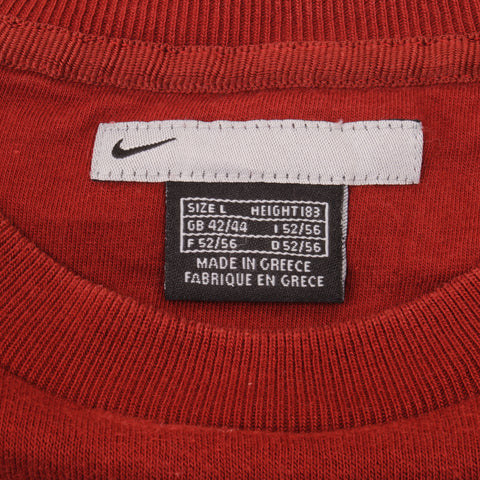

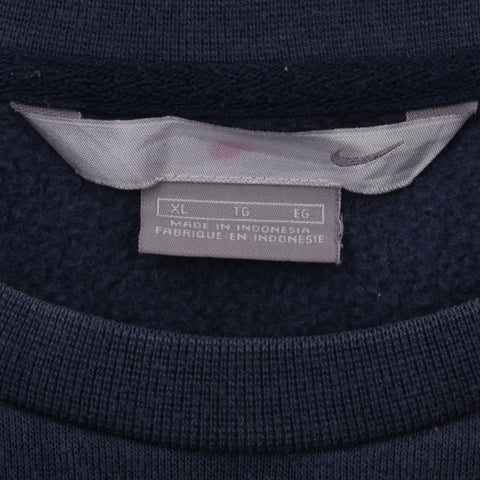
The Nike Silver label is commonly associated with the early and mid-2000s.
These tags often have a more technical or modern appearance than labels from the 1980s and 1990s. Printed versions are frequently found on T-shirts and sweatshirts, while woven or embroidered versions may appear on jackets, joggers, and other athletic garments.
Silver labels may be found on:
- T-shirts
- Sweatshirts
- Track jackets
- Windbreakers
- Joggers
- Training apparel
- Performance clothing
As time moves forward, more early-2000s Nike pieces qualify as vintage under the commonly used 20-year guideline. However, the desirability of an item still depends on its design, rarity, condition, construction, and cultural significance—not simply its age.
Explore our complete collection of authentic vintage Nike clothing, including T-shirts, sweatshirts, jackets, windbreakers and track pants.
Alternative Vintage Nike Labels and Product Lines
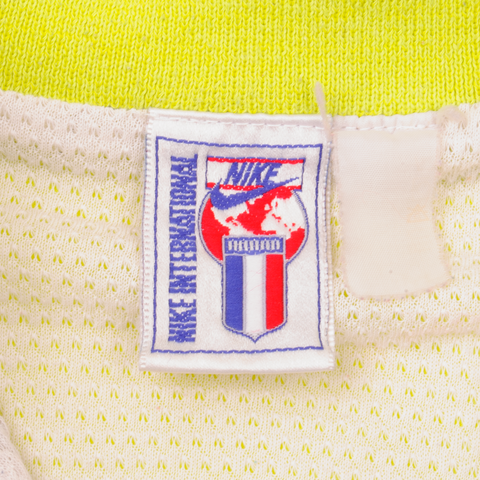
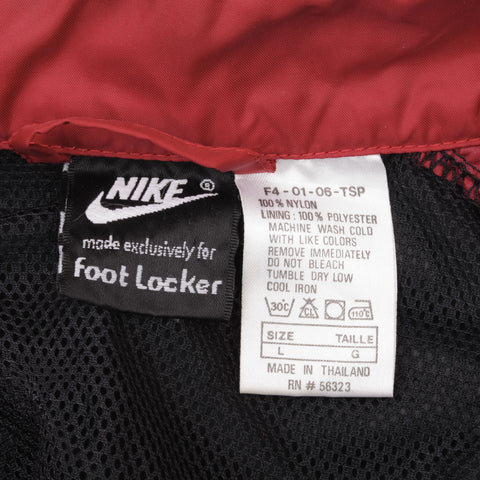
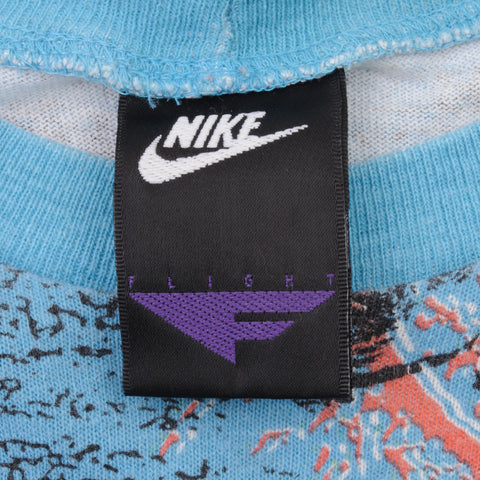
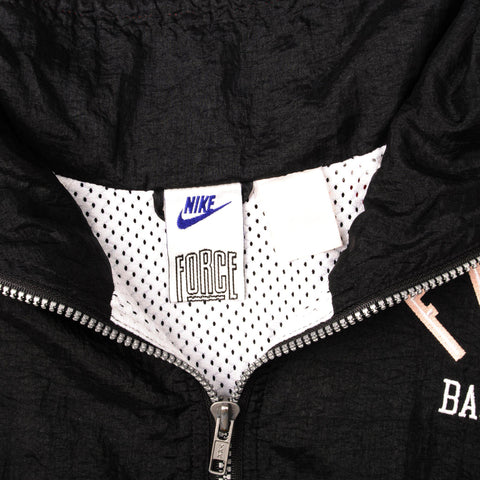
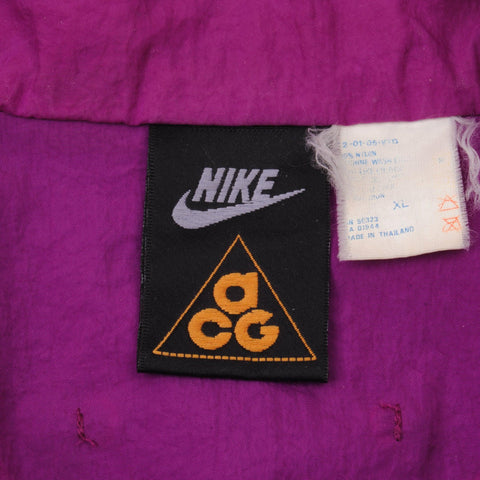
Not every vintage Nike item uses one of the primary color-based labels above.
Nike created specialized branding for different sports, retail partnerships, and sub-labels. These can include:
Nike International
Nike International labels are often associated with running, track, and globally inspired athletic collections. The logo, color scheme, and tag construction vary by period.
Nike Flight
Nike Flight became closely connected with basketball apparel and footwear. Vintage Flight pieces often feature bold graphics, basketball-inspired designs, and the recognizable Flight logo.
Nike Force
Nike Force branding also appears on basketball-related products and selected athletic apparel, particularly from the late 1980s and 1990s.
Nike ACG
Nike ACG—All Conditions Gear—is associated with outdoor and trail-oriented clothing, footwear, and equipment. Vintage ACG tags differ from standard Nike labels and may feature distinctive triangular graphics, bright colors, or technical styling.
Explore our complete collection of authentic vintage Nike clothing, including original Nike T-shirts, sweatshirts, jackets, sportswear, and rare designs from the 1980s, 1990s, and early 2000s.
Retailer and Collaboration Labels
Some Nike garments were produced for particular retailers or as exclusive collaborations. These may use a standard Nike tag, a modified version, or an additional retailer label.
A different tag does not necessarily indicate that an item is fake. First determine whether it belongs to a recognized Nike product line or legitimate retail program.
How to Date Vintage Nike Clothing More Accurately
A neck tag can provide a useful estimate, but experienced vintage dealers examine the entire garment.
Use the following clues together.
1. Examine the care label
The care label may provide:
- Fiber content
- Washing instructions
- Country of manufacture
- RN or identification numbers
- Style or production codes
- Factory information
- Additional Nike branding
A care label can sometimes narrow the date more precisely than the main neck tag.
2. Check the country of manufacture
Older Nike apparel is often associated with USA production, but Nike also manufactured authentic garments in many other countries.
Depending on the period and garment, you may encounter pieces made in:
- USA
- Canada
- Mexico
- Taiwan
- Hong Kong
- Thailand
- Malaysia
- Indonesia
- South Korea
- China
- Other production countries
Country of origin is supporting evidence—not a complete authentication test.
3. Inspect the stitching
Construction methods can help support an approximate date.
Check:
- Sleeve hems
- Bottom hems
- Collar stitching
- Seam finishing
- Reinforcement
- Tag attachment
Single-stitch construction is often associated with older T-shirts, but it is not proof by itself. Some vintage shirts use double stitching, while some modern reproductions intentionally imitate older construction.
4. Study the fabric
Older Nike apparel may have a different texture, weight, and drape than modern performance clothing.
Look for:
- Cotton or cotton-polyester blends
- Older heavyweight fleece
- Thin vintage jersey fabric
- Nylon shells
- Mesh lining
- Natural fading and wear
Artificial distressing can imitate age, so fabric wear should be considered together with the tag and construction.
5. Review the logo and graphic style
Nike’s branding changed over time.
Look at:
- Swoosh shape and proportions
- Nike font
- Registration marks
- Graphic placement
- Printing technique
- Embroidery quality
- Color palette
A design that fits the period suggested by the label increases confidence in the estimated date.
6. Inspect hardware and trim
For jackets and pants, examine:
- Zippers
- Snaps
- Drawcords
- Elastic
- Buttons
- Toggle systems
- Lining materials
Branded zipper pulls, aging metal hardware, and period-correct trim can all provide useful supporting evidence.
How to Tell Whether a Vintage Nike Tag Is Authentic
No single feature can guarantee authenticity, but suspicious items often show several inconsistencies.
Watch for:
- Incorrect Nike typography
- A distorted or uneven Swoosh
- Poor-quality printing or embroidery
- Misspellings
- Strange spacing
- Modern materials on a supposedly early garment
- A tag style that does not match the garment’s design
- Unusual care-label information
- Inconsistent sizing or country-of-origin details
- Artificial aging that does not match the rest of the item
At the same time, authentic vintage production was not always perfectly uniform. Minor differences in stitching, tag alignment, fading, or printing can occur.
The best approach is to compare multiple details rather than rejecting or authenticating an item based on one characteristic.
Common Mistakes When Dating Nike Tags
Assuming every tag color represents one exact year
Nike tags generally identify a period, not a single production year.
Assuming every Made in USA item is from the 1980s
Nike continued selling USA-made apparel across different periods, and country of manufacture alone cannot determine an exact date.
Assuming every single-stitch Nike shirt is authentic vintage
Single stitching can support an older date, but reproductions can imitate it.
Assuming all Silver-label Nike is from the same year
Silver labels appeared in multiple variations throughout the 2000s.
Ignoring secondary labels
The smaller wash or care tag may contain more useful manufacturing information than the neck label.
Frequently Asked Questions
How can I tell how old my Nike shirt is?
Start with the Nike neck tag and compare its color, logo, typography, and construction with known examples. Then inspect the care label, stitching, fabric, country of manufacture, graphic style, and overall garment construction.
What is the oldest vintage Nike clothing tag?
The Pinwheel and early Orange labels are among the best-known early Nike apparel tags from the late 1970s and early 1980s. Nike-related apparel history includes additional variations, so the exact answer can depend on the type of product being examined.
What years were Nike Orange tags used?
Orange labels are generally associated with approximately 1978 through 1983. Some variation and overlap may occur.
What years were Nike Blue tags used?
Blue labels are commonly associated with approximately 1984 through 1987.
What years were Nike Grey tags used?
Grey Nike labels are generally associated with the late 1980s through the early 1990s, approximately 1987 through 1994.
Are Nike Silver tags vintage?
Many early-2000s Silver-label Nike garments are now at least 20 years old and may reasonably be described as vintage. Age alone, however, does not determine rarity or value.
Does Made in USA guarantee that Nike clothing is vintage?
No. USA manufacture is a helpful clue, but it does not establish the exact age or authenticity of a garment by itself.
Can a vintage Nike item have a tag made in Asia?
Yes. Nike manufactured authentic apparel in numerous countries throughout the 1980s, 1990s, and 2000s. The tag should be evaluated together with the garment’s other details.
Are all vintage Nike tags exactly the same?
No. Nike used different suppliers, factories, garment categories, regional labels, sub-brands, and transitional designs. Authentic tags from the same general period may show small differences.
Can I date Nike clothing from the RN number?
An RN number may help identify the registered company, but it usually does not provide a simple, exact production date. Style numbers, factory codes, and care-label formats may offer additional clues.
What years were Nike Black tags used?
Nike Black tags are generally associated with the mid-1990s, around 1994. Some overlap can occur between tag generations, so the label should be evaluated together with the garment’s construction, care label, country of manufacture, and other dating clues.
What years were Nike White tags used?
Nike White tags are commonly associated with approximately 1994 through 1999. Several variations exist, so details such as the Swoosh, typography, care-label format, and manufacturing information can help narrow the date.
What years were Nike Red and Black tags used?
Nike Red and Black tags are most commonly associated with the late 1990s, approximately 1997 through 1999. As with other Nike tag generations, production periods can overlap depending on the garment and country of manufacture.
Final Thoughts
Nike tags provide a valuable starting point for identifying and dating vintage Nike clothing.
The Pinwheel and Orange labels are associated with the brand’s early apparel era. Blue and Grey labels are commonly connected with the 1980s and early 1990s. Black, White, and Red-and-Black labels help identify many 1990s garments, while Silver labels are frequently seen on early-2000s Nike pieces.
Still, the most reliable estimate comes from examining the entire item.
Use the tag together with the care label, stitching, fabric, graphic design, hardware, manufacturing origin, and garment construction. When all of those details point toward the same period, you can date the piece with much greater confidence.
Shop Authentic Vintage Nike
Looking for authentic vintage Nike apparel? Explore our collection of vintage Nike T-Shirts, sweatshirts, jackets, and windbreakers from the 1970s through the early 2000s. Every item is individually authenticated, measured, and one of a kind.
Shop Related Collections:
- Vintage Nike T-Shirts
- Vintage Nike Jackets
- Vintage Nike Sweatshirts
- Vintage Nike shoes
- Vintage Nike New Arrivals
© 2023–2026 Vintage Rare USA. Original text and photography are protected by copyright unless otherwise credited. Linking to this guide with attribution is encouraged. Reproducing original photographs or substantial portions of the article without permission is prohibited. See our Copyright & Image Usage Policy.

Written by Felix Mohen


Leave a comment
This site is protected by hCaptcha and the hCaptcha Privacy Policy and Terms of Service apply.