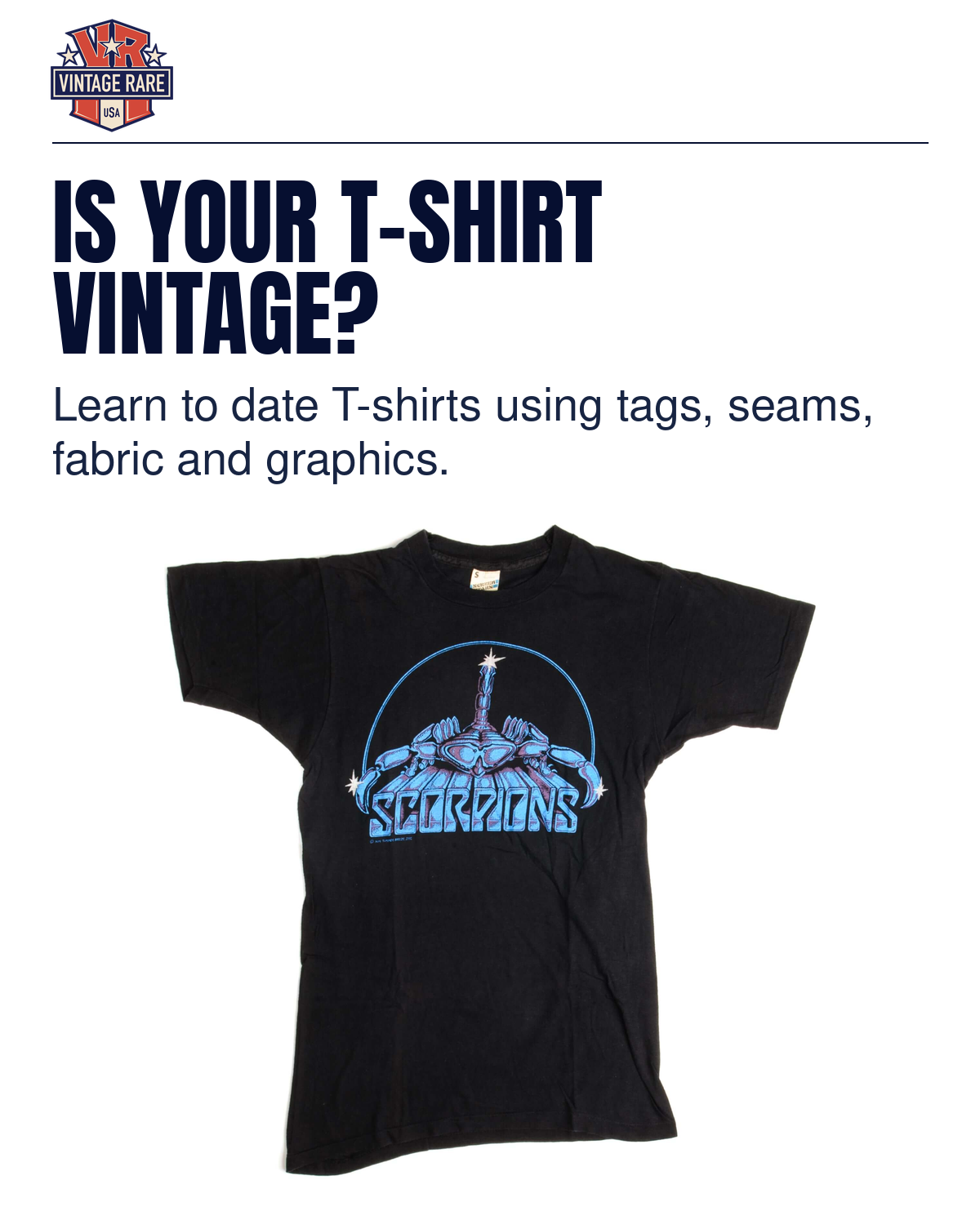
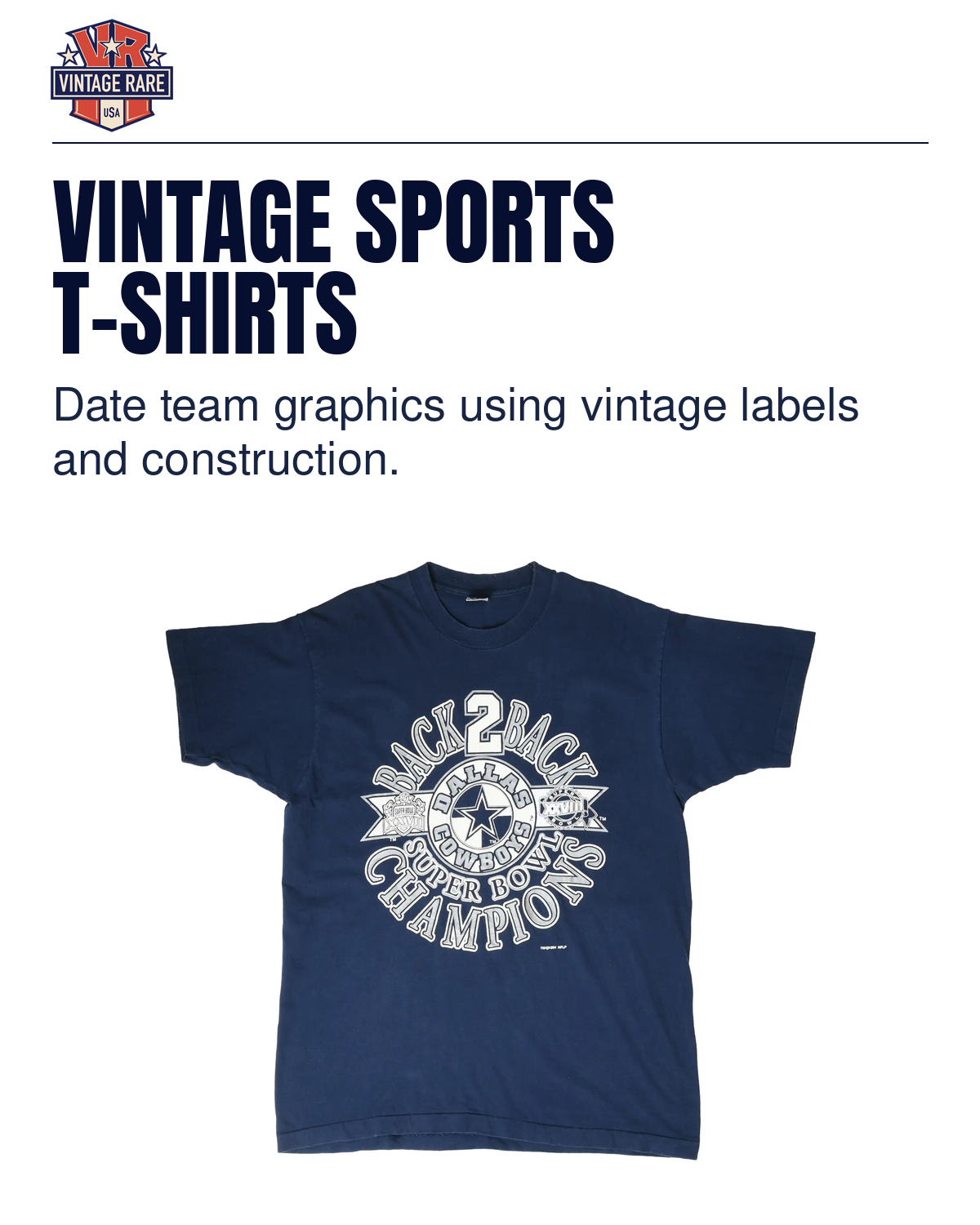
The Ultimate Guide to Vintage Clothing | Vintage Rare USA Skip to content

Cart

Your cart is empty

Article: The Ultimate Guide to Vintage Clothing: How to Identify, Date & Buy Authentic Vintage

The Ultimate Guide to Vintage Clothing: How to Identify, Date & Buy Authentic Vintage

The Ultimate Guide to Vintage Clothing: How to Identify, Date & Buy Authentic Vintage

Estimated reading time: 20–25 minutes


Introduction

Vintage clothing is more than just fashion—it's a way to own a piece of history. From perfectly faded Levi's jeans and well-worn Harley-Davidson T-shirts to rare Nike sweatshirts and classic Carhartt jackets, vintage garments tell stories that modern clothing simply cannot replicate.

Over the past decade, vintage clothing has grown from a niche hobby into a global movement. Collectors, fashion enthusiasts, celebrities, and everyday shoppers increasingly seek authentic vintage pieces for their quality, individuality, and timeless style. As sustainability becomes more important, buying vintage also helps extend the life of existing garments and reduces the demand for new manufacturing.

Whether you're shopping for your first vintage T-shirt or building a serious collection of rare apparel, understanding how to identify authentic vintage clothing is essential. Learning about vintage labels, construction techniques, sizing differences, and condition can help you make smarter buying decisions and avoid costly mistakes.

This comprehensive guide explains everything you need to know—from the history of vintage fashion to identifying authentic garments, understanding sizing, caring for vintage clothing, and discovering some of the most collectible brands ever produced.


Table of Contents

Use this guide to navigate each section and learn everything you need to know about authentic vintage clothing, from identification and history to sizing, care, and collecting.

• What Is Vintage Clothing?
• Vintage vs. Retro vs. Antique
• A Brief History of Vintage Clothing
• Why Vintage Clothing Is More Popular Than Ever
• How to Identify Authentic Vintage Clothing
• The Most Collectible Vintage Clothing Brands
• Dating Vintage Clothing by Decade
• Understanding Vintage Sizing
• Understanding Vintage Clothing Condition
• Caring for Vintage Clothing
• Common Mistakes New Vintage Buyers Make
• Frequently Asked Questions
• Shop Authentic Vintage Clothing

Looking for authentic vintage clothing?

Explore over 7,000 one-of-a-kind vintage T-shirts, sweatshirts, jackets, jeans, and more at Vintage Rare USA. Every item is individually selected for authenticity, accurately measured, and ready to ship. New arrivals are added every Friday at 6:00 PM Pacific.

👉 Shop New Arrivals

What Is Vintage Clothing?

Vintage clothing refers to genuine garments produced in previous decades that remain wearable today. Unlike modern reproductions, authentic vintage clothing was manufactured during the era it represents.

Although definitions vary slightly, most experts consider clothing to be vintage once it reaches approximately 20 years of age. Garments from the early 2000s, 1990s, 1980s, 1970s, and earlier are generally recognized as vintage today.

Examples include:

What separates authentic vintage clothing from modern apparel is not simply age, but also craftsmanship, materials, manufacturing methods, and historical significance.

Many vintage garments were made in the United States using heavyweight cotton, durable stitching, and construction techniques that are uncommon today. As a result, well-preserved vintage clothing often outlasts many modern garments.


Vintage vs. Retro vs. Antique

One of the most common misconceptions is that vintage, retro, and antique all mean the same thing. They do not.

Term Meaning
Vintage Authentic clothing manufactured roughly 20–100 years ago.
Retro Modern clothing designed to imitate styles from previous decades.
Antique Clothing generally more than 100 years old, often collected for historical significance rather than everyday wear.

For example:

A Harley-Davidson shirt manufactured in 1993 is vintage.

A Harley-inspired shirt made in 2026 using distressed printing is retro.

A wool military uniform from World War I would generally be considered antique.

Understanding this distinction is important because authentic vintage pieces usually hold greater historical, collectible, and resale value.


A Brief History of Vintage Clothing

Understanding fashion history helps explain why certain garments have become highly collectible.

1920s–1930s

During the early twentieth century, clothing was primarily designed for durability. Workwear dominated everyday fashion, and garments were commonly produced from heavyweight wool, denim, leather, and canvas.

Many of today's most collectible workwear brands trace their origins to this period.


1940s

World War II influenced nearly every aspect of clothing production.

Material shortages encouraged simpler designs while military uniforms inspired civilian fashion. Denim jackets, fatigue shirts, field jackets, and utility garments became increasingly common.

Many military surplus items remain highly collectible today.

Shop Vintage Military Jackets


1950s

Economic growth transformed fashion.

Leather jackets, bowling shirts, western wear, varsity jackets, and early graphic T-shirts became increasingly popular. Denim also gained mainstream appeal thanks to Hollywood icons including James Dean and Marlon Brando.

This decade helped establish many styles still worn today.


1960s

The 1960s introduced bold graphics, colorful prints, psychedelic fashion, tie-dye, and youth culture.

Rock music heavily influenced clothing, creating demand for concert apparel that would later become some of the world's most valuable vintage T-shirts.


1970s

The 1970s saw explosive growth in sportswear, denim, workwear, and licensed graphic apparel.

During this decade:

  • Levi's expanded globally.
  • Harley-Davidson apparel gained popularity.
  • Single-stitch T-shirts became common.
  • Athletic brands continued to grow.
  • Vintage concert shirts became increasingly collectible.

1980s

Many collectors consider the 1980s the golden era of vintage clothing.

Popular items included:

This decade is known for high-quality cotton, oversized silhouettes, and durable construction.

Shop 1980s clothing


1990s

Vintage clothing reached another milestone during the 1990s.

Many of today's most sought-after pieces originated during this decade, including:

The popularity of music, sports, movies, and pop culture made graphic apparel one of the defining fashion categories of the decade.

Shop 1990s clothing


Early 2000s (Y2K)

Y2K fashion has rapidly become collectible.

Early 2000s clothing often includes:

  • Oversized denim
  • Racing shirts
  • Skate brands
  • Distressed graphics
  • Cargo pants
  • Logo-heavy sportswear
  • Baggy silhouettes

Today, many collectors consider early 2000s garments to be the newest generation of vintage clothing.

Shop Y2k Clothing


Why Vintage Clothing Is More Popular Than Ever

Vintage clothing has become one of the fastest-growing segments of the fashion industry for several reasons.

Every Piece Is Unique

Unlike mass-produced clothing, many vintage garments are one of a kind. Natural fading, wear patterns, graphics, and aging create individuality that cannot be replicated.

Superior Quality

Many vintage garments were produced using heavyweight cotton, durable stitching, and premium construction techniques that have stood the test of time.

Sustainability

Buying vintage extends the life of existing clothing and helps reduce textile waste, making it an environmentally conscious alternative to fast fashion.

Timeless Style

Vintage fashion allows people to create personal style by mixing garments from different decades rather than following short-lived trends.

Collectibility

Some rare vintage pieces appreciate significantly in value over time, making them attractive to both fashion enthusiasts and collectors.


How to Identify Authentic Vintage Clothing

One of the most valuable skills any vintage enthusiast can develop is learning how to identify authentic vintage clothing. While some garments clearly show their age, others require a closer inspection of their labels, stitching, materials, and construction.

Modern reproductions can look convincing at first glance, but authentic vintage pieces usually reveal their true age through small details that experienced collectors learn to recognize.

Rather than relying on a single characteristic, examine several features together before determining whether a garment is truly vintage.


Start with the Clothing Label

The label is often the easiest place to begin.

Most clothing manufacturers have changed their logos, fonts, materials, and manufacturing information over the decades. Learning how these labels evolved can help narrow down when a garment was produced.

Look for:

  • Brand logo
  • Font style
  • Country of manufacture
  • Registered trademarks
  • RN numbers
  • Fabric content
  • Care instructions
  • Union labels
  • Size format

Many brands updated their labels every few years, making them useful dating tools.

For example:

  • Nike introduced several distinct tag styles throughout the 1970s, 1980s, and 1990s.
  • Champion labels evolved dramatically as Reverse Weave became more popular.
  • Levi's patches and care tags changed regularly.
  • Carhartt labels have undergone multiple redesigns over the years.

Related Guides


Country of Manufacture

Where a garment was made often provides useful clues.

Many collectible vintage garments were manufactured in:

  • United States
  • Canada
  • United Kingdom
  • France
  • Portugal

During the 1990s and early 2000s, production gradually shifted to countries including Mexico, Honduras, El Salvador, Haiti, Nicaragua, and several Asian countries.

Although country of origin alone does not determine whether an item is vintage, it provides important context when combined with other identification methods.


Understanding RN Numbers

Many American clothing brands include an RN (Registered Identification Number) on their labels.

An RN identifies the company responsible for manufacturing or marketing the garment.

While an RN number does not reveal the exact production year, it can help confirm that a label belongs to the correct company.

Collectors often compare RN numbers with known vintage examples when authenticating clothing.


Union Labels

One of the strongest indicators of older American-made clothing is a union label.

Garments produced by unionized factories often feature labels from organizations such as:

  • ILGWU (International Ladies' Garment Workers' Union)
  • ACTWU
  • AFL-CIO affiliated unions

Because these organizations used different label designs during different periods, union labels can help estimate the production era.


Single Stitch vs. Double Stitch

One of the most recognized characteristics of vintage T-shirts is single-stitch construction.

What Is Single Stitch?

Single stitching refers to one visible row of stitching along the sleeve or bottom hem.

Throughout much of the 1970s, 1980s, and early 1990s, many manufacturers used single stitching on T-shirts.

As manufacturing methods evolved, double stitching became the industry standard.

However, this should never be used as the only authentication method.

Many authentic vintage shirts have double stitching, especially those produced during the mid-to-late 1990s and early 2000s.

Likewise, some modern brands intentionally reproduce single stitching to imitate vintage garments.

Always evaluate stitching together with the tag, fabric, graphics, and overall construction.


Single Stitch Double Stitch
Common on many vintage tees Standard on most modern garments
Usually one visible stitch line Two visible stitch lines
Frequently found on 70s–early 90s apparel Common from the mid-90s onward
Helpful clue—not definitive proof Not evidence that a garment isn't vintage


Fabric Quality

Vintage clothing often feels noticeably different from modern garments.

Many older pieces were produced using:

  • Heavyweight cotton
  • Thick fleece
  • Durable denim
  • Wool
  • Canvas
  • Leather

The fabric frequently becomes softer over decades of wear while retaining excellent durability.

Modern reproductions often imitate the look of vintage garments but rarely reproduce the same fabric weight and texture.


Graphics and Printing

The print itself can reveal valuable information.

Older screen-printed graphics often:

  • Crack naturally with age
  • Fade gradually
  • Feel softer after years of washing
  • Sit closer to the fabric

Modern reproductions frequently use newer printing methods that produce brighter colors and a thicker printed surface.

Natural wear generally looks random rather than perfectly distressed.


Copyright Dates

Many licensed garments include copyright information beneath the artwork.

For example:

© Disney

© Warner Bros.

© NFL

© NBA

© Harley-Davidson

These dates often provide an excellent estimate of when the design was created.

Keep in mind that the copyright date reflects the artwork—not necessarily the exact production year of the garment.

Most authentic vintage licensed apparel was manufactured within a short period after the copyright date.


Examine the Construction

Vintage garments were generally built to last.

Look for details such as:

  • Straight, consistent stitching
  • Reinforced seams
  • Thick collars
  • Heavy ribbing
  • Durable cuffs
  • Quality zippers
  • Brass hardware
  • Heavy-duty snaps

Construction quality is often one of the clearest differences between authentic vintage clothing and inexpensive modern reproductions.


Wear Patterns

Authentic vintage clothing ages naturally.

Typical signs of genuine wear include:

  • Soft fading
  • Minor fabric thinning
  • Collar wear
  • Natural cracking
  • Denim whiskering
  • Sun fading
  • Patina on hardware

Be cautious of garments with perfectly symmetrical "distressing," as these effects are often artificially created.


Authentication Checklist

Before purchasing vintage clothing, ask yourself:

✔ Does the label match the expected era?

✔ Does the country of manufacture make sense?

✔ Is the stitching consistent with the garment's age?

✔ Does the fabric feel appropriate?

✔ Is the graphic naturally aged?

✔ Does the construction reflect vintage manufacturing quality?

✔ Do the wear patterns appear genuine?

✔ Does everything point to the same production period?

The more questions you can answer "yes" to, the greater the likelihood that the garment is authentic.


Expert Tip

Never rely on a single feature to determine authenticity. A single-stitch hem, a Made in USA label, or a vintage-looking graphic alone does not guarantee that a garment is authentic. The best approach is to evaluate multiple characteristics together—labels, construction, fabric, graphics, stitching, and overall craftsmanship. Experienced collectors build confidence by looking at the complete picture rather than any one detail.

The Most Collectible Vintage Clothing Brands

While thousands of clothing brands have produced memorable garments over the decades, only a select group have achieved legendary status among collectors. Their history, craftsmanship, cultural influence, and limited availability have made them some of the most sought-after names in vintage fashion.

Below are some of the brands that consistently attract collectors and remain popular today.


Levi's

Few brands have influenced fashion as much as Levi's.

Founded in 1853, Levi's became synonymous with durable denim and American workwear. Today, vintage Levi's jeans and jackets are prized for their heavyweight denim, selvedge construction, classic fits, and timeless styling.

Popular vintage Levi's pieces include:

Related Guide

Vintage Levi's Sizing & Fit Guide


Nike

Vintage Nike apparel has become one of the fastest-growing collecting categories.

Collectors actively seek:

  • Swoosh T-shirts
  • Center Swoosh sweatshirts
  • Made in USA apparel
  • Windrunners
  • Track jackets
  • Early athletic wear

Original Nike tags often help identify production periods from the 1970s through the early 2000s.

Related Guide

How to Date Vintage Nike Tags & Labels


Champion

Champion introduced Reverse Weave technology in the 1930s, creating one of the most iconic sweatshirts ever produced.

Vintage Champion garments are known for:

  • Heavyweight fleece
  • Reverse Weave construction
  • College logos
  • Professional sports graphics
  • Excellent durability

Collectors especially value Made in USA examples.

Related Guide

How to Date Vintage Champion Reverse Weave Tags


Carhartt

Originally created for railroad workers, Carhartt has become one of the most recognizable names in vintage workwear.

Highly collectible items include:

  • Detroit Jackets
  • Active Jackets
  • Chore Coats
  • Double Knee Pants
  • Duck Canvas Jackets

Natural fading and wear often enhance their appeal.

Related Guide

The Ultimate Guide to Vintage Carhartt Jackets


Harley-Davidson

Harley-Davidson T-shirts are among the most collected vintage graphic shirts in the world.

Collectors look for:

  • Eagle graphics
  • Dealership shirts
  • Bike Week apparel
  • 3D Emblem designs
  • Double-sided graphics
  • Skull artwork

Many dealership shirts were produced in limited quantities, making certain designs especially desirable.

The Ultimate Guide to Vintage Harley Tee Shirts


Patagonia

Vintage Patagonia garments combine technical innovation with outstanding durability.

Popular collectibles include:

  • Synchilla fleece
  • Retro-X jackets
  • Snap-T pullovers
  • Early outdoor shells

Their timeless design continues to appeal to outdoor enthusiasts and collectors alike.


Ralph Lauren

Vintage Polo Ralph Lauren remains one of the most recognizable names in American fashion.

Collectors seek:

  • Polo Bear pieces
  • Rugby shirts
  • Heavy knit sweaters
  • Chaps
  • Big Pony collections
  • Classic embroidered polos

Disney

Vintage Disney apparel from the 1980s and 1990s has become increasingly collectible.

Popular characters include:

  • Mickey Mouse
  • Donald Duck
  • Goofy
  • Pluto
  • Winnie the Pooh
  • Disney Parks exclusives

Original Disney Store and Disney Parks garments are particularly desirable.


Sportswear

Sports apparel represents one of the largest vintage categories.

Popular leagues include:

  • NFL
  • NBA
  • MLB
  • NHL
  • NCAA
  • NASCAR

Collectors often seek garments from:

  • Starter
  • Logo Athletic
  • Nutmeg Mills
  • Lee Sport
  • Salem Sportswear
  • Changes
  • Magic Johnson T's

Dating Vintage Clothing by Decade

Although every brand has its own history, most vintage clothing shares characteristics typical of the decade in which it was produced.

Decade Common Characteristics
1950s Workwear, western shirts, selvedge denim, wool
1960s Psychedelic prints, slimmer cuts, colorful patterns
1970s Single stitch tees, bell bottoms, bold graphics
1980s Heavyweight sweatshirts, oversized fits, athletic brands
1990s Graphic tees, NASCAR, Disney, Harley-Davidson, sportswear
Y2K Baggy fits, racing graphics, skatewear, oversized logos

Understanding these trends helps narrow the production era before examining tags and labels.


Understanding Vintage Sizing

One of the biggest surprises for first-time buyers is that vintage clothing rarely fits like modern apparel.

Over the years, manufacturers have changed sizing standards, and many garments have naturally shrunk through repeated washing and drying.

Because of this, the tagged size should always be treated as a reference rather than a guarantee of fit.

For example:

A vintage Large may fit like today's Medium.

A vintage Medium may fit like today's Small.

This is why reputable vintage retailers provide actual garment measurements rather than relying solely on the original size tag.

When shopping online, compare the listed measurements with a similar garment that already fits you well.


How to Read Measurements

All measurements are taken flat in inches for accuracy.


👕 Tops / T-Shirts

  • A — Armpit to Armpit (chest width)
  • B — Neck to Bottom (length)


👕 Long Sleeve Tops / Sweatshirts 

  • A — Armpit to Armpit (chest width)
  • B — Neck to Bottom (length)
  • C — Sleeve Length (shoulder seam to cuff)


🧥 Structured Jackets / Outerwear

  • A — Armpit to Armpit (chest width)
  • B — Neck to Bottom (length)
  • C — Shoulder to Shoulder
  • D — Sleeve Length


👖 Pants / Bottoms

  • A — Waist (laid flat, measured across)
  • B — Inseam (crotch to bottom hem)
  • C — Hip (widest point)
  • D — Rise (crotch to top waistband)
  • E — Leg Opening (hem width)

Understanding Vintage Clothing Condition

Every vintage garment has lived a life before reaching a new owner.

Small signs of wear often add character and authenticity rather than reducing desirability.

Condition is commonly described using terms such as:

Grade Description
Excellent Minimal wear with no major flaws.
Very Good Light wear expected for age.
Good Noticeable wear but fully wearable.
Fair Heavy wear, repairs, fading, or staining.

Some collectors actively seek faded, distressed pieces because no two garments age in exactly the same way.

Always read the description carefully and review all photographs before purchasing.


Caring for Vintage Clothing

Proper care can significantly extend the life of vintage garments.

Washing Tips

  • Wash only when necessary.
  • Turn graphic shirts inside out.
  • Use cold water.
  • Choose a gentle cycle.
  • Avoid bleach.
  • Use mild detergent.

Drying

Air drying is recommended whenever possible.

High heat from dryers can accelerate fading, shrinkage, and cracking of vintage graphics.

Storage

Store vintage clothing in:

  • Cool, dry spaces
  • Breathable garment bags
  • Acid-free storage boxes for valuable items

Avoid prolonged exposure to direct sunlight, which can cause fading over time.


Common Mistakes New Vintage Buyers Make

Many first-time buyers make the same avoidable mistakes.

Buying Only by Tag Size

Always use measurements rather than relying solely on the labeled size.

Ignoring Condition

Read descriptions carefully and inspect all photos before purchasing.

Assuming Every Old Shirt Is Valuable

Age alone does not determine value. Brand, rarity, condition, graphics, and demand all play important roles.

Confusing Retro with Vintage

Modern reproductions are inspired by vintage styles but were not produced during the original era.

Skipping Research

Learning about brands, labels, and manufacturing history can help you make more informed purchases and avoid reproductions.


Why Shop Authentic Vintage Clothing?

Buying authentic vintage clothing offers more than just unique style.

You gain access to garments that often feature superior craftsmanship, distinctive graphics, and a history that cannot be recreated by modern reproductions.

At Vintage Rare USA, every item is individually selected for its authenticity, condition, and character. Because each piece is one of a kind, once it sells, it is rarely replaced with an identical item.

Whether you're searching for vintage Nike apparel, Levi's denim, Carhartt workwear, Harley-Davidson T-shirts, sportswear, or classic graphic tees, our goal is to help collectors and enthusiasts discover authentic vintage clothing they can enjoy for years to come.


Explore our collections:


Frequently Asked Questions About Vintage Clothing

What qualifies as vintage clothing?

Vintage clothing generally refers to garments that are at least 20 years old and were produced during the era they represent. Clothing from the early 2000s, 1990s, 1980s, 1970s, and earlier is commonly considered vintage.


What is the difference between vintage and retro?

Vintage clothing is authentic apparel made in a previous era. Retro clothing is modern apparel designed to imitate vintage styles.


Is vintage clothing better quality than modern clothing?

Many vintage garments were produced using heavyweight cotton, durable denim, wool, and stronger construction techniques than those commonly used in today's fast-fashion industry.


Why is vintage clothing expensive?

Price depends on several factors including rarity, condition, brand, demand, age, graphics, and historical significance. Limited production pieces often command higher prices.


How do I know if vintage clothing is authentic?

Look at multiple factors including:

  • Brand labels
  • Country of manufacture
  • Fabric quality
  • Stitching
  • Graphics
  • Construction
  • Copyright dates
  • Overall wear patterns

No single feature should be used alone.


What is single-stitch clothing?

Single stitching refers to garments with one visible row of stitching along the sleeve or bottom hem. It is common on many vintage T-shirts produced before the mid-1990s, but should be considered alongside other authentication methods.


Is Made in USA clothing always vintage?

No. While many vintage garments were manufactured in the United States, some modern apparel is also made in the USA. Country of origin should be evaluated with labels, construction, and other identifying features.


Why does vintage clothing fit differently?

Vintage sizing standards often differ from today's sizing. In addition, garments may shrink over time. Always compare actual measurements rather than relying solely on the tagged size.


Can vintage clothing be washed?

Yes. Most vintage garments can be safely washed using cold water, a gentle cycle, mild detergent, and air drying. Always check the care label first if present.


Is faded vintage clothing valuable?

In many cases, yes. Natural fading, patina, and authentic wear are often desirable to collectors because they give each garment a unique appearance.


Which vintage brands are the most collectible?

Some of the most sought-after brands include:

  • Levi's
  • Nike
  • Champion
  • Harley-Davidson
  • Carhartt
  • Patagonia
  • Ralph Lauren
  • Disney
  • Starter
  • Adidas

What are the most collectible vintage T-shirts?

Popular categories include:

  • Band T-shirts
  • Harley-Davidson
  • NASCAR
  • Disney
  • Looney Tunes
  • Movie shirts
  • Sports teams
  • Concert shirts
  • College apparel

Can vintage clothing increase in value?

Certain rare vintage garments have appreciated significantly over time. Factors such as rarity, condition, brand, and cultural significance all influence long-term value.


Where is the best place to buy authentic vintage clothing?

Purchase from reputable vintage retailers that provide detailed descriptions, accurate measurements, and clear photographs. Authenticity and transparency are key when shopping online.


Why Choose Vintage Rare USA?

Finding authentic vintage clothing shouldn't be a guessing game.

At Vintage Rare USA, we carefully curate thousands of one-of-a-kind vintage garments from some of the world's most recognizable brands. Every item is individually photographed, accurately measured, and described so you can shop with confidence.

Our inventory includes vintage:

  • T-Shirts
  • Sweatshirts
  • Jackets
  • Jeans
  • Sportswear
  • Workwear
  • Denim
  • Military apparel
  • Outdoor clothing
  • Graphic apparel

Featuring brands including:

  • Levi's
  • Nike
  • Champion
  • Carhartt
  • Harley-Davidson
  • Patagonia
  • Ralph Lauren
  • Adidas
  • Columbia
  • The North Face
  • Nautica
  • Tommy Hilfiger

Because every piece is authentic vintage, each item is unique and available in limited quantities.

New arrivals are added every Friday at 6:00 PM Pacific, making it easy to discover fresh vintage finds every week.


Related Vintage Guides

Continue exploring our expert vintage resources:

  • How to Date Vintage Nike Tags & Labels
  • How to Date Vintage Champion Reverse Weave Tags & Labels
  • Vintage Levi's Sizing & Fit Guide (501, 505, 517, 550 & 684)
  • The Ultimate Guide to Vintage Carhartt Jackets
  • Vintage Clothing Care Guide (future article)
  • How to Spot Fake Vintage T-Shirts (future article)
  • Vintage Harley-Davidson Tag Guide (future article)
  • Vintage Starter Jackets Guide (future article)

Shop Authentic Vintage Clothing

Explore thousands of authentic one-of-a-kind vintage pieces across our collections:

    Every item is individually selected for authenticity, condition, and timeless style.


    Final Thoughts

    Vintage clothing offers something that modern fashion often cannot: authenticity, craftsmanship, individuality, and history. Whether you're searching for your first vintage T-shirt, building a collection of rare denim, or hunting for iconic sportswear, learning how to identify authentic vintage garments will help you shop with confidence.

    From understanding labels and construction to recognizing quality fabrics and natural aging, every piece tells a story. By taking the time to learn these details, you'll not only make smarter purchasing decisions but also develop a deeper appreciation for the people, brands, and eras that shaped vintage fashion.

    As trends come and go, authentic vintage clothing continues to stand the test of time. Its durability, unique character, and lasting appeal make it a favorite among collectors, fashion enthusiasts, and everyday shoppers alike.

    Whether you're just beginning your vintage journey or expanding an established collection, we hope this guide serves as a trusted resource for years to come.

    Happy collecting!


    Leave a comment

    This site is protected by hCaptcha and the hCaptcha Privacy Policy and Terms of Service apply.

    All comments are moderated before being published.

    Read more

    How to Tell if a T-Shirt Is Vintage: Complete Identification Guide

    Learn how to tell if a T-shirt is vintage using tags, stitching, fabric, prints, copyright dates and more with this complete vintage identification guide.

    Read more